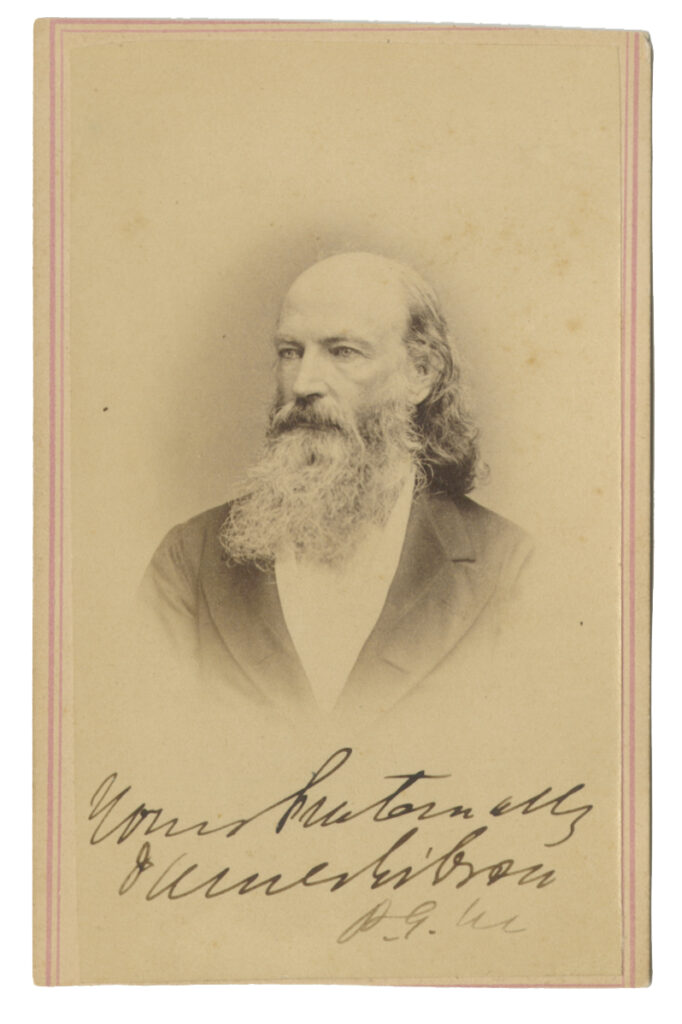
Ebenezer Sibly was an English physician, a Freemason, and an astrologer. He became the first Master of Lodge of Joppa No. 188, London in 1798.
He is best known as the creator of the birth chart of the United States, at the time of the Declaration of Independence, July 4th 1776, 5.10 pm, in Philadelphia, Pennsylvania. The chart is commonly known as Sibly’s Chart, and still being cited by astrologer today. While the exact time of the Declaration is still debated till this day, one of the popular theories is he learned the exact time from his Masonic connection.
One of Sibly’s publications in our collection is A New and Complete Illustration of the Occult Science, published in London around 1784. In the first two pages of the book, he also dedicated his book to the Masonic Brethren.
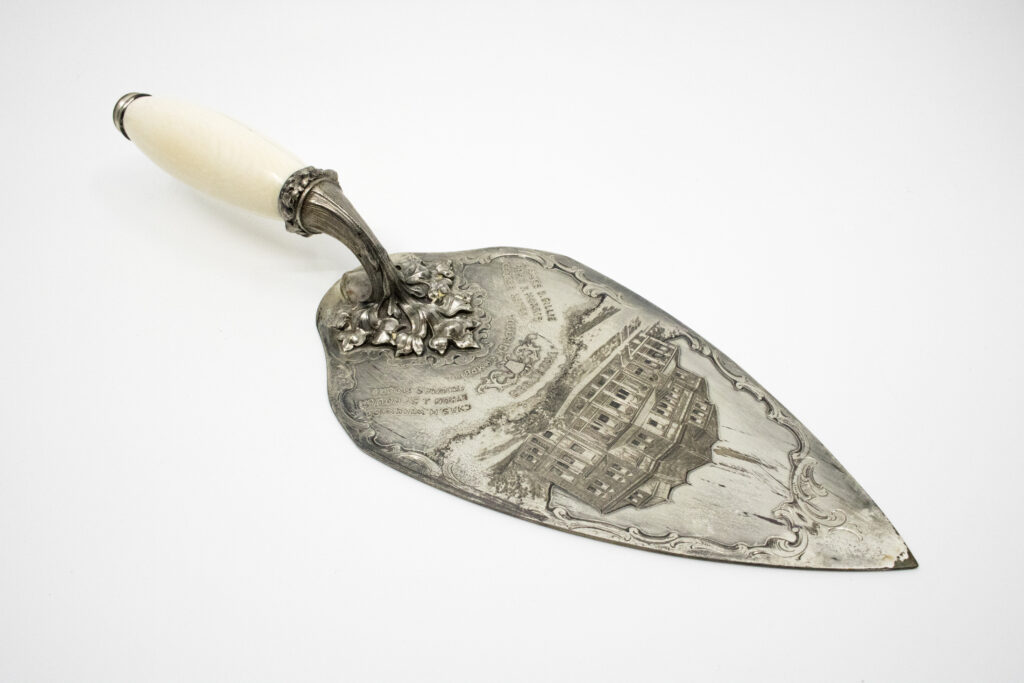
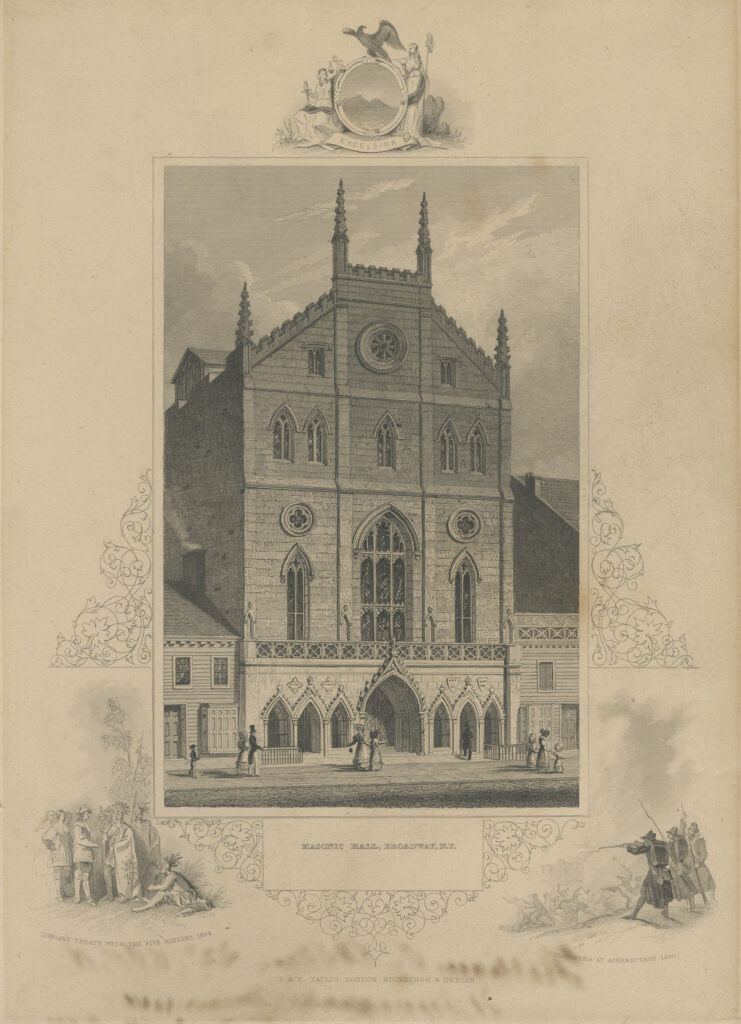
We are pleased to announce the new display installation at the 6th floor of our Grand Lodge building. The compact exhibit display showcases the trowel that laid the cornerstone of New York Masonic Hall, accompanying the architectural drawing of the building, drawn by the architect, Bro. Harry P. Knowles.
The trowel was presented to MW Townsend Scudder by Pyramid Lodge No. 490, the lodge Bro. Knowles was a member on May 6th 1908. The cornerstone was originally laid for the extension part on the side of 24th Street and 6th Avenue.
The cornerstone was rededicated again in December 5th, 2010, by MW Vincent Libone, on the occasion of the centennial celebration of the building.
The Constitution of Free-Masons, was the first published Masonic constitution, containing Masonic history, Masonic directory, Masonic music, and the standardized lodge regulations for lodge use in England. The first edition was written by James Anderson, under the supervision of The Grand Lodge of England, and published in London in 1723.
Detached spine, image taken before repair.
The front piece is an engraving by John Pine, depicting the Grand Master, Duke of Montagu, passing the scroll to the next Grand Master, the Duke of Wharton.
Detach spines, image taken before repair.
Repaired spines.
The bookplate belonged to Michael Furnell, Past Provincial Grand Master of Provincial Grand Lodge of North Munster, Ireland, in 1842. It is part of Rob Morris Collection.
The first edition published in colonial America was printed by Benjamin Franklin in Philadelphia in 1734, when he was elected the Grand Master of Pennsylvania. When compared, the American version was printed in a smaller format, and the title page engraving is not included.
Detached spine, image before repair.
Pages and spine reattached after repair.
The book belonged to George Williamson (1827-1886), a member of Westchester Lodge No. 180 in Ossining. He was an avid rare book collector with five hundred Masonic books in his collection.
Above the bookplate, the name R. D. Sanxay is written with pencil. RW Richard D. Sanxay was a Virginian Mason, and served as Grand Tiler of the Grand Lodge of Virginia from 1856 to 1868. He was a member of Richmond Lodge No. 10. It is possible that Sanxay was the previous owner before George Williamson.
Both versions are in possessions in the Grand Lodge of New York’s collection. They were unfortunately in very poor conditions. The covers and pages detached from the brittle spines, likely caused by the prolonged hands on display in the past. Now, both of the valuable constitutions are repaired by the book conservators, back to stable condition.
The Library is currently working on a rare books survey – going through the back stacks of the Library’s collections to find rare books and manuscripts. During this survey work, it was discovered that the Library’s collection contained a rare 17th Century edition of the Fama Fraternitatis. The book the Library has is a later 1681 edition of the original 1614 Fama printed in German and published in Regensburg, Germany.
It is not known exactly when this book was donated to the Library. The inside cover dates the binding of the book to August of 1861. In addition the Grand Lodge of New York bookplate on the inside cover states “Presented by German Masonic Temple Association.” Many of the German Masonic lodges in New York City had their own Masonic temple on East 15th Street starting in 1880. It is possible that the Fama originally came from this German Masonic Library. During the rare book survey work for the Library, other volumes were discovered in the back stacks from the 18th and early 19th centuries that are marked with the same bookplate.
The Fama Fraternitatis was a significant book of the European Enlightenment period in the 17th Century. It was a foundational manuscript of the first Rosicrucians during the 1610s, and its publication and dissemination swiftly launched the early Rosicrucian movement in Europe. The anonymous writers of the Fama claimed that they were part of a secret and Holy Brotherhood, which possessed the hidden knowledge of the Philosopher’s Stone. They stated that they obtained this alchemical knowledge when the Brotherhood opened the tomb of Christian Rosenkreuz. In this tomb they discovered the lost books and artifacts of the past Rosicrucian Order. The Rosicrucians called for new members to join with them to help finish the work begun by their order’s founder, Christian Rosenkreuz. This work would lead to Europe’s renewal after the death and destruction of the bloody religious wars of the 16th century.
The authorship of the Fama is much debated among scholars today. Most scholars attribute the work to Johann Valentin Andrae (1586-1654), a well-educated Protestant pastor from Tübingen, Germany. The title of this work, translated roughly from the German, reads: A general and universal reformation of the whole world: written by the Fame of the Fraternity, the Honorable Order of the Rosicrucians, to all Scholars and Leaders of Europe. Now publicly published and communicated to all faithful hearts. First published in Kassel by Wilhelm Wessell, in the year 1614. Reprinted because of its extreme rarity, and supplemented with an appendix of various pertinent writings.
In addition to the Fama, this rare book also contains a few other writing from the same era:
Traiano Boccalini’s The Universal and General Reformation of the Whole Wide World, which is an extract from Boccalini’s News from Parnassus, a work that advocates for more human love, charity, and affection, as opposed to reforming society.
Adam Haselmeyer’s reply to the Rosicrucians: this work is significant, as it is the earliest known printed reference to the Rosicrucian Brotherhood (Haselmeyer worked as a notary public for Archduke Maximillian of Tyrol, but he was also an alchemist and translator of alchemical works).
Title Page of the Fama Fraternitatis (Left) and first page of the Fama text (Right)
This rare book was printed on hand-made paper and many of its pages contain decorative printed motifs, as shown in the images below:
Library Resources:
Churton, Tobias. The Golden Builders: Alchemists, Rosicrucians, and the First Freemasons. Boston: Weiser Books, 2005.
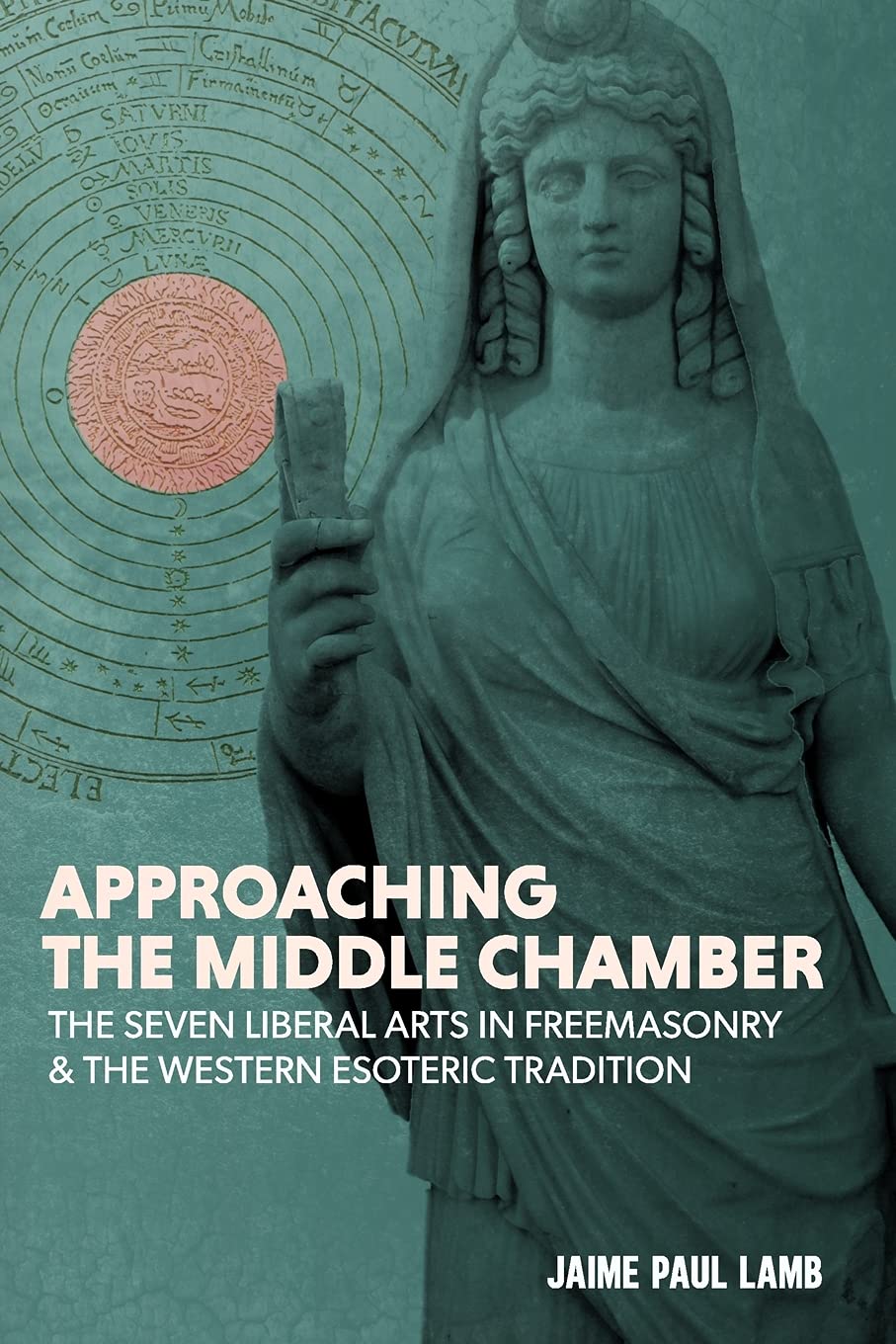
McIntosh, Christoper. The Rosicrucians: The History, Mythology, and Rituals of an Esoteric Order. York Beach: Samuel Wieser, Inc., 1997.
We warmly welcome you to explore our latest video!
In our collection at the Chancellor Robert R Livingston Library of Grand Lodge we have a Geneva Bible from 1602.
This version of the Bible is known as the Geneva Bible, the Breeches Bible and as the Pilgrims Bible. It was first printed in Geneva in 1560 and it uses the term ‘breeches’ to describe the coverings that Adam and Eve made for themselves. It was the Bible most frequently used by the Pilgrims to America.
The Geneva Bible holds immense historical importance as the preferred Bible of English Protestants during the 16th and early 17th centuries, including the Pilgrims and Shakespeare. Renowned for its extensive marginal notes, which helped readers understand the scriptures, it was the first English Bible to be fully divided into verses. Published between 1560 and 1644, this translation influenced many of the English Reformation’s religious and political ideas, making it a cornerstone of English Protestantism.
We are delighted to share about the newest acquisition of Robert R Livingston Library and Museum, the rare stereograph set of the former New York Masonic Hall, produced by E. & H.T. Anthony & Co. This acquisition is possible through the support of the Trustees of the Chancellor Robert R Livingston Masonic Library.
The stereograph set features the images of the interior and lodge rooms of the demolished Grand Lodge of New York’s Masonic Hall on the 23rd Street and 6th Avenue, the same plot with the current Grand Lodge of New York building. The previous New York Masonic Temple was designed by Napoleon Le Brun, dedicated in June 1875, and served the New York Brethren until it was replaced by the current building in 1910.
Slideshow of the New York Masonic Temple stereograph set.
What is Stereograph?
Stereograph typically consisted of a pair of the near-identical images, creating an illusion of three-dimensional effect when viewed with stereoscope. They were a popular collectible at the time, offering the sight of landscapes, places and celebrities people could not experience in person.
E. & H.T. Anthony & Co. was the photography company founded by the brothers Edward Anthony and Henry T. Anthony. They were well known as the manufacturer of photographic supplies and the publisher of commercial photograph in the mid-19th century. The stereo card of New York Masonic Temple was one of their collections sold at the time.
Stereograph of New York Masonic Temple, Corinthian Room, by E. & H.T. Anthony & Co.
Recreation of the three-dimensional effect of the Corinthian Room stereograph when looking through stereoscope.
Previously, we only have the drawings published in the newspapers in the Grand Lodge’s collection as our visual resource of how the previous temple’s interiors looked like. Thanks to this acquisition, we now can see the interior and lodge rooms through the photographic medium, many of the rooms were never seen before. Not only that, the back of the card also provides very insightful details of its construction and floorplan.
When comparing between the two mediums, for example, The Main Hall as described on the stereograph and the drawing of The Foyer in Frank Leslie’s Illustrated Newspaper published in 1889. The drawing by Charles Bunnell had slightly different decorations as it was drawn about 14 years after the photograph was taken in 1875.
Stereograph of New York Masonic Temple, Main Hall, by E. & H.T. Anthony & Co.
The Grand Masonic Jubilee, Frank Leslie’s Illustrated Newspaper, April 27 1889. Artist: Charles Bunnell.
The most notable finding in the drawing, however, is the lower part of the Silence Statue located on the upper staircase. The Silence Statue was commissioned by RW Levi H. Willard as a gift to the Grand Lodge. It is the very early work in the career of the distinguished sculptor, Augustus Saint-Gaudens before he gained his fame from the David Farragut Memorial in Madison Square Park. His other notable work is Diana sculpture, previously installed on top of the original Madison Square Garden building, now displayed at Philadelphia Museum of Art.
The Silence Statue being unveiled at the Grand Lodge of New York in May 1876 indicates that the photograph of the Main Hall with an empty staircase was taken a few months earlier, when the temple was newly dedicated in 1875. The Silence Statue was later relocated to the lobby of Soldiers’ and Sailors’ Memorial Hospital of Masonic Home, Utica, and now on display at Daniel D. Tompkins Chapel.
Silence Statue in the lobby of Soldiers’ and Sailor’s Memorial Hospital, Utica, New York.
More examples are the Egyptian Room and Asylum stereographs, described as The Chapter Room and The Commandery Room in Harper’s Weekly Magazine (1875). The Egyptian Room stereograph provides the close up of the triangle altar and the East, while the illustration (unknown artist) shows the entire room. The Asylum stereograph unfortunately has the bottom half of the film darkened, while the illustration can provide the floor details.
Stereograph of New York Masonic Temple, Egyptian Room and Asylum, by E. & H.T. Anthony & Co.The New Masonic Temple, 23rd Street and 6th Avenue, Harper’s Weekly Magazine June, 1875. Artist: unknown.
Another example is the crowded Grand Lodge Room where the dedication ceremony was held in June 1875, as drawn in Leslie’s Illustrated Newspaper. The stereograph provides the view of an empty room from a different angle.
Stereograph of New York Masonic Temple, Grand Lodge Room, by E. & H.T. Anthony & Co.
Grand Lodge Room of The Masonic Temple – Dedicatory Exercise by the Grand Lodge of The State of New York, Frank Leslie’s Illustrated Newspaper, June 19 1875. Artist: unknown.
This stereograph set of New York Masonic Temple is surely the valuable addition to our collection. They would be an excellent resource for research and preservation of New York Masonic history and architecture. For more of our photograph collection, please visit our online museum.
June 2nd 2025 will be the 150th Anniversary of Grand Lodge Headquarters at this location! Although not exactly “the same building” we celebrate 150 Years of Masonry on these hallowed footprints!
Among the many gems in the Chancellor Robert R Livingston Library’s collection is the first Masonic book printed in America. The book is called The Constitutions of the Free-Masons and was printed in 1734 by Benjamin Franklin.
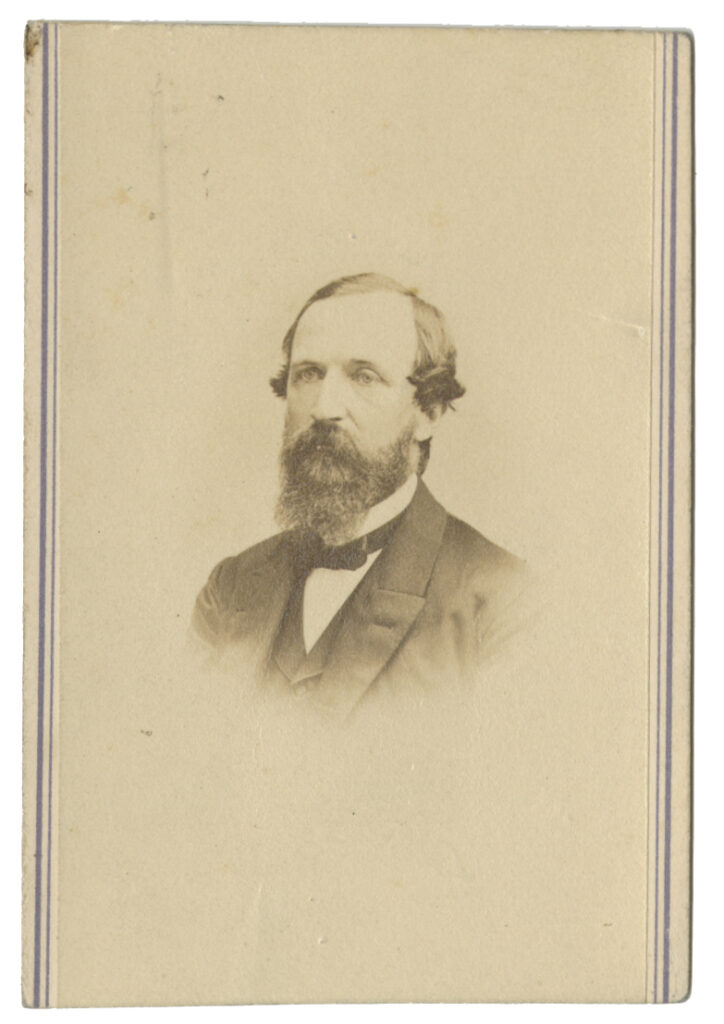
In our photograph collection, I stumbled upon the photograph of a gentleman name Edward Giddings among the portraits of high-profile Masons from the mid-late 19th century. I was not aware of who Edward Giddings really was until the research revealed that he was one of the important players of the Morgan Affair and anti-Masonic movement.
To summarize the Morgan Affair in 1826, it was the murder mystery that ultimately led to the anti-Masonic frenzy which almost destroyed Freemasonry in North America. It all began when William Morgan, or Captain Morgan, announced his publishing of Illustrations of Masonry, claiming to expose the secrets of Freemasons to the public. Morgan later vanished and was never found again. He was last seen in Canandaigua being taken into the carriage right after being released from debtor jail.
When Morgan didn’t come home, and Mrs. Morgan began searching for her disappeared husband, the rumors, the conspiracy, and the sensation began to spread throughout New York. While there has been no solid account of what really happened, the most popular consensus is, Morgan was allegedly abducted and murdered by the members of Masonic Fraternity. The scandal had spread far and wide, leading the country into the hysteria of the Anti-Masonic movement.
Portrait of Edward Giddings, taken in 1861
Edward Giddings, at the time, was a Mason, and the lighthouse keeper at Fort Niagara, and he was one of the prime witnesses of Morgan’s final moment, as the popular theory being Morgan was murdered by drowning in Niagara River. Ironically, his testimony was not believed and was rejected by the court based solely on his atheism.
Despite this, Giddings later wrote his own testimony, describing his involvement in the scene in the Anti-Masonic Almanac in 1829, titled An account of the savage treatment of Captain William Morgan, in Fort Niagara: who was subsequently murdered by the Masons, and sunk in Lake Ontario, for publishing the secrets of Masonry. Although it cannot be proven true, the Anti-Masonic movement was more than eager to weaponize his testimony against the Masons.
Cover of An Account of the Savage Treatment of Captain William Morgan, written by Edward Giddings, published in 1829
Later, the other photograph in the collection also caught my attention. It is a portrait of Giddings next to Rob Morris, the distinguished Masonic author at the time. The story behind Rob Morris being in the same picture with Edward Giddings is the curiosity worth looking into. How and when did they meet?
Portrait of Rob Morris, La Grange, Kentucky, and Edward Giddings, Lockport, New York, taken in 1861
Rob Morris was the celebrated Masonic author and poet, the Past Grand Master of Kentucky, and the founder of the Order of the Eastern Star. He was known for his several Masonic publications, such as Freemasonry in the Holy Land, The lights and shadows of Freemasonry, The level and the square, and one of them is William Morgan or political anti-masonry.
I looked into William Morgan or political anti-masonry, as my hunch is Morris might include the backstory of these photographs in his Morgan Affair publication, and I am correct. In the book William Morgan or political anti-masonry, published in 1883 by Macoy Publishing, Morris wrote the account of his personal investigation on Morgan’s disappearance. His search for the truth eventually led him to meet Edward Giddings in person at Lockport, New York in 1861. There is no doubt that the two photographs of interest were taken during their brief encounter.
In his book, Morris, understandably, held some resentment toward Giddings as he questioned his atheism belief and described Giddings as a deceiver who made up his testimony for fame and money, not to mention how much his ‘testimony’ had hurt the Freemasonry and many of its members. As they discussed, Giddings confessed to Morris that, the truth was, he did not see nor know what actually happened to William Morgan in his final moment.
According to Morris, Giddings was raised in a lodge in Boston around 1810 despite being an atheist. Giddings admitted to him that he lied about his religious faith upon initiation into Freemasonry, and he had so little commitment to the craft as a result. Giddings died in 1862, a year after they met, at Fort Niagara, New York, at the age of 77.
Rob Morris was one of the biggest contributors of the Grand Lodge of New York’s collection. His several Masonic portraits and publications are the valuable resources for research and education of American Masonic History. This little discovery in the Grand Lodge collection really pique my interest, and I am pleased to share its story in this blog post.
Reference
Morris, Robert. William Morgan, or, Political Anti-Masonry: Its Rise, Growth and Decadence. R. Macoy, 1883.
Thank you for your interest in our special presentation in occasion of the 77th Annual Metropolitan Region’s Masons & Families Dedication Service & Breakfast.
For the first time, we are holding both in-person and online artifact presentation. These are the amazing artifacts from the Grand Lodge of New York that can be seen at the event and also in the library website and online museum:
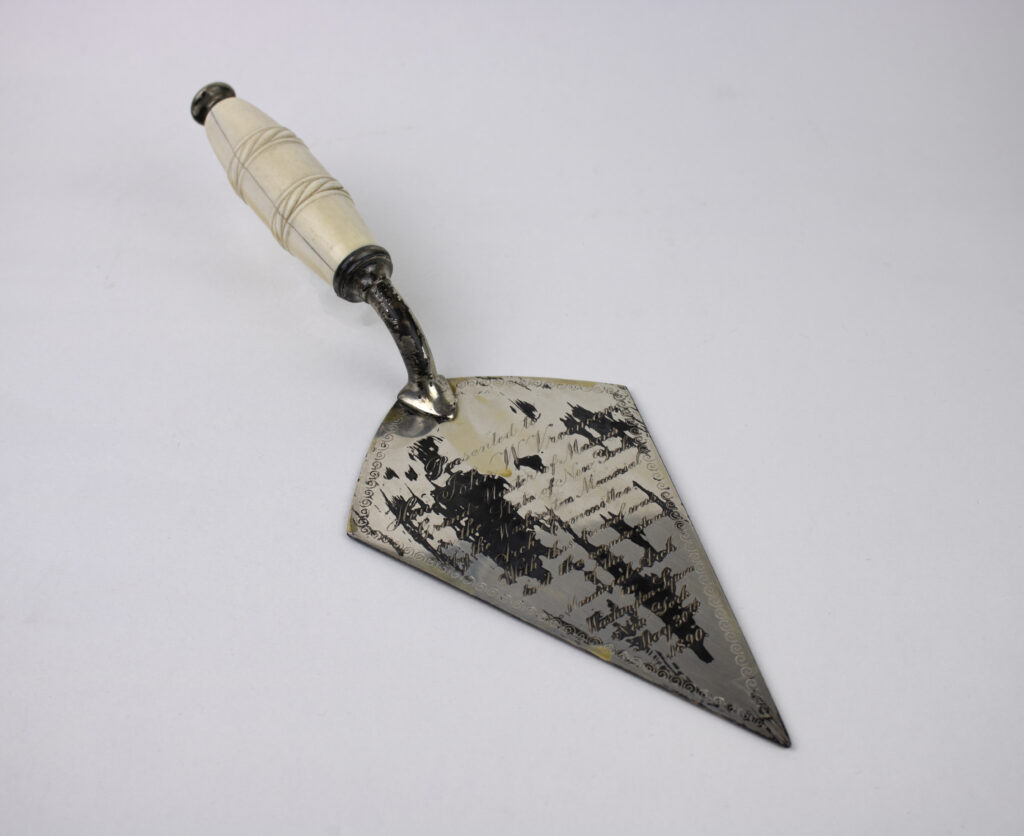
The Washington Square Arch Trowel
An ivory and sterling trowel used to lay the cornerstone of the Memorial Arch at Washington Square Park, on the date of May 30th, 1890, by the Grand Master MW John W. Vrooman.
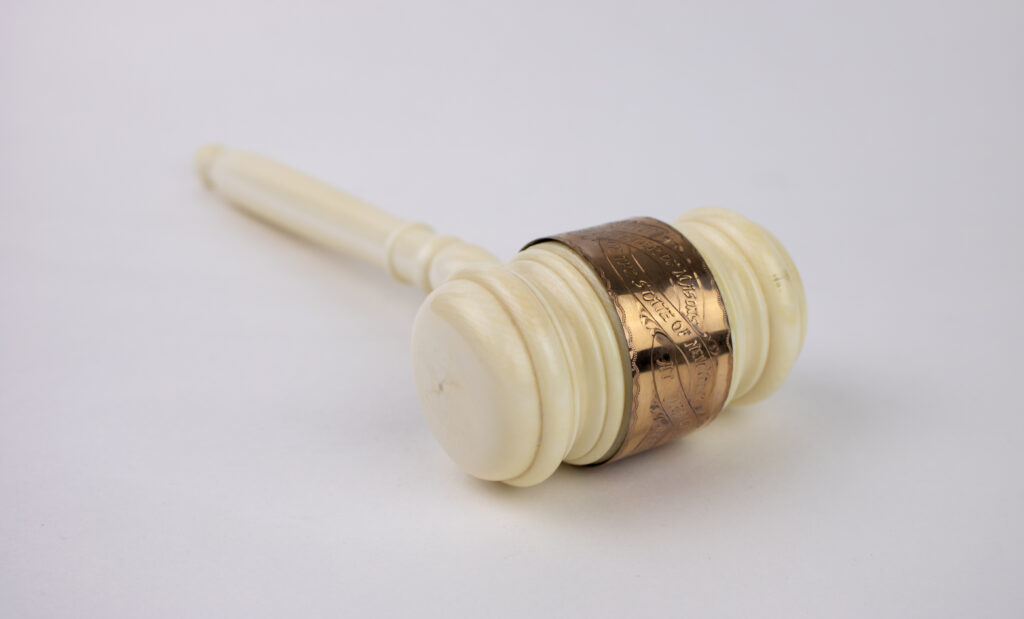
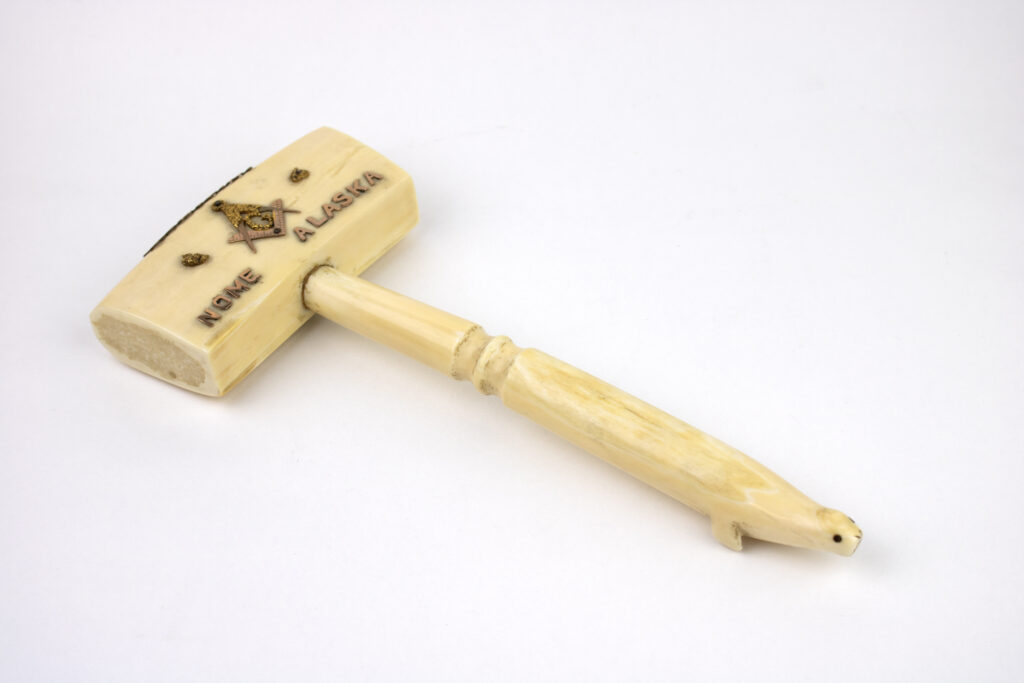
A souvenir gavel made of whalebone from Nome, Alaska, with a handle carved in the figure of a seal. Presented to Adelphi Lodge No. 23 by Abraham Simson in 1905.
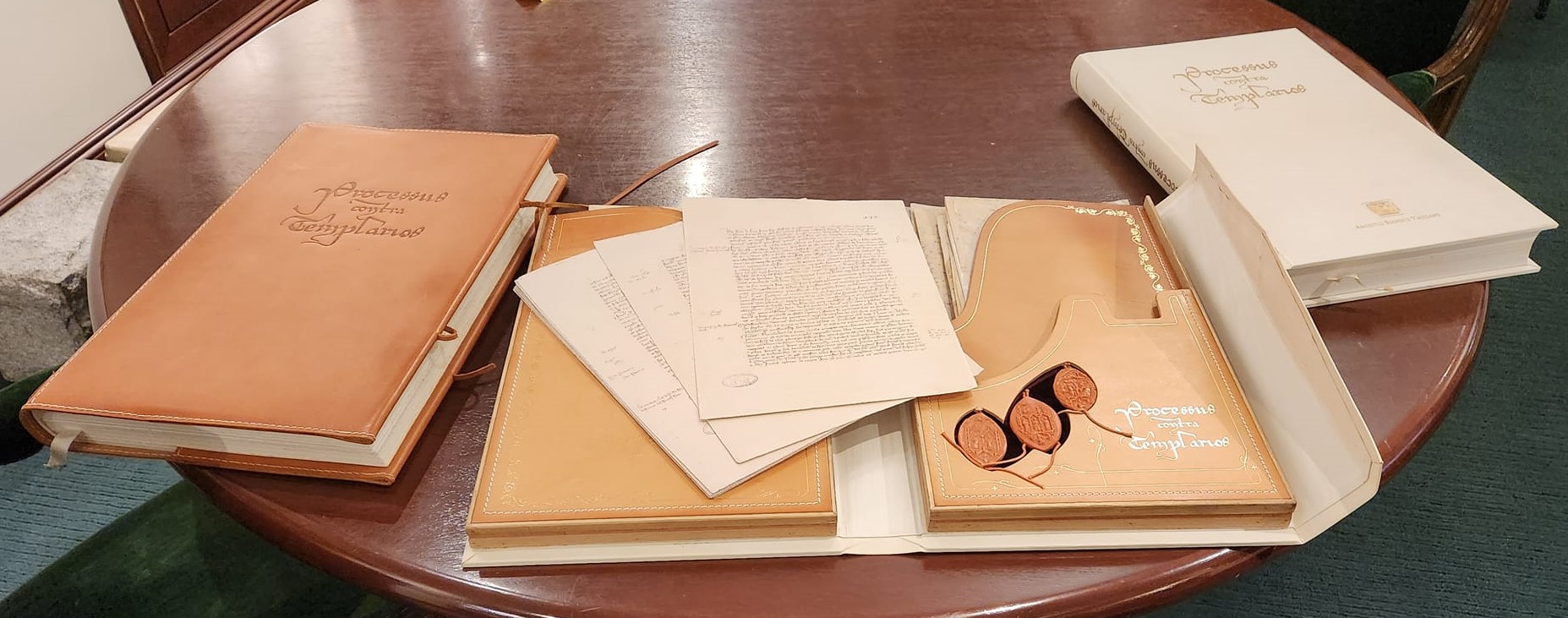
The last and not least is Processus Contra Templarios, parchments of the hearings of the Trial against the Knights Templar in 1308, the faithful reproduction of manuscripts from the Vatican archive. Only 799 copies were published in 2007, and the Grand Lodge of New York has one in possession.